An isometric dungeon crawl in the shape of Diablo 1. Four floors down, a Demonlord
holds a court you have to walk into, and the only way back out is the one his death opens. Every
torch you leave behind is light you no longer have.
One petition, three decrees, twenty-five decisions to a reign. Fine the moon and it
starts paying in tides; hire a dragon and it wants a quarterly review. Your council advises you
honestly, partially, and entirely in its own interest.
Werewolves drop no experience. Only trees do, so leveling means breaking away from
the pack to chop. The same wood also fuels your lantern, and the lantern is how far you can see.
Drop a tree on a wolf; ten minutes to dawn.
A top-down roguelite where the Doppler shift is the combat system: fly at something
to hit harder, away to hit softer, with a warp drive that doubles as dash, shield and battering ram.
Underneath runs an eight-map campaign told through intercepted comms chatter, while your ship
computer keeps filing the whole thing as a hazard bonus.
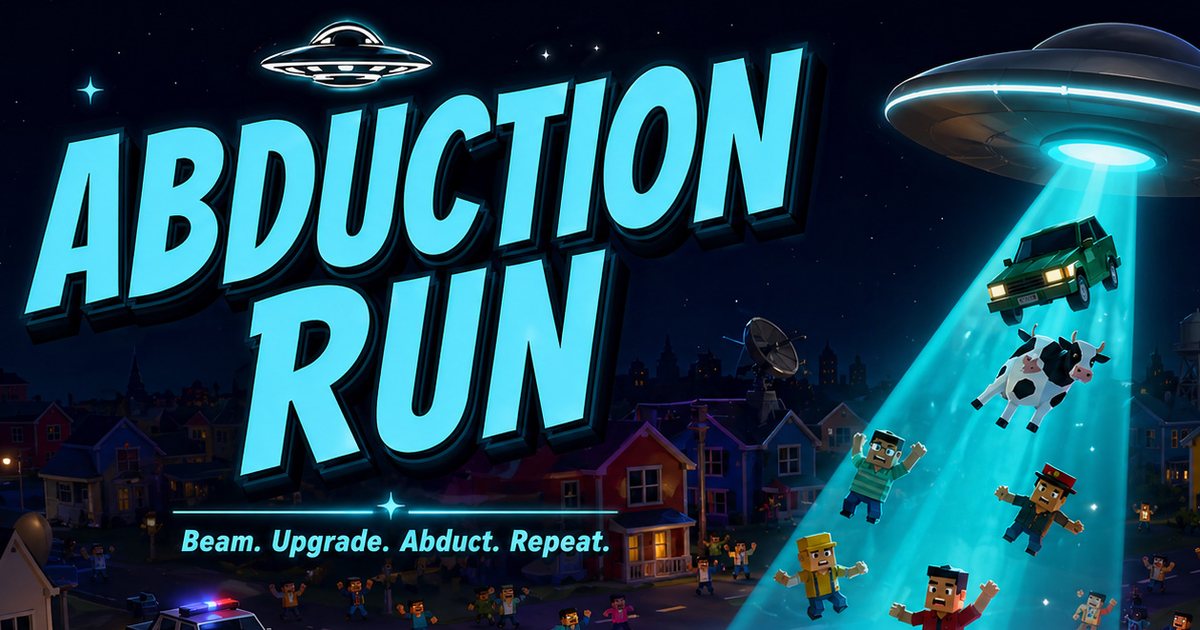
Fly a saucer over farmland and suburbs and beam up anything that moves. One meter
is your score, your fuel and your hull at once, and it drains constantly — feed or fall out of the
sky. Live cargo pays double, which is the whole argument against shooting.
Walk the woods in first person and chop. Every axe upgrade doubles your damage;
six seconds later the forest quietly doubles its hit points to match. Twenty-two tiers, an idle
economy underneath, and a prestige button that hands you a stone axe again.
Build the force. Write the doctrine. Watch it fail.
You never drive. You build three vehicles, write the rules they follow, then watch
a deterministic battle unfold through their incomplete picture of it. The debrief shows where the
plan broke, and the same seed lets you run it again.
Autobattler
Tactics
Simulation
Play
Alongside
Not games, but built the same way
Things made for games rather than to be played. Built the same way as the rest
of the catalogue and held to the same standard — though not all of them are a URL you can
simply open.
What are your real odds, with the bag as it is right now?
A chaos bag calculator for Arkham Horror: The Card Game that counts rather
than samples. Every figure is exact — including the chance of succeeding by two or more,
which decides whether an ability actually fires and which nothing else will tell you. It
knows what the scenario card does to each symbol, asks you for the board state it cannot
see, and refuses to guess at the rest.
A rules reference your AI assistant can call directly: card data, deck
building, and the official rulebooks, with the document and line number attached to every
answer. It exists so a disagreement at the table ends in a citation rather than a shrug —
and so the Grim Rule gets invoked where the rules are genuinely silent, instead of at the
first sign of inconvenience. Private by necessity: it carries the
publisher's own rules text, so it goes out to a few people by invitation and not onto the
open web.
Rules lookup
MCP server
Invitation only
Read more
Nothing yet
The next one
Built when a game asks twice.
There is no roadmap for this shelf. Something gets made here when the same
problem turns up at the table two sessions running and nobody can find a thing that solves
it properly — which is exactly how the first one happened.
Unscheduled
Probably
The Studio
Small studio, strange catalogue
Gorewood is one person with a lifelong itch to make games, finally scratching it. Every title
here started as a question — what if XP grew out of the ground? — and got built far
enough to find out.
Some got finished. Some are still being figured out in public. That's the arrangement. All of
them are built for the open web — one URL, no launcher, no account, no download. Open a tab and
it starts.
The catalogue leans deadpan: horror that keeps a straight face, comedy that never explains the
joke, and systems left honest enough to break in interesting ways.


 Early access